Thomas Doukinitsas
Showing posts with label Notes. Show all posts
FIELDS & FRAMES: Briefing and Film Experiments

FIELDS & FRAMES: Briefing and Film Experiments

During our first meeting with Vicky we were introduced to the project and told the following:


Our Assessment criteria for the unit:
  • Technical procedures and production practice's
  • Reflective, innovative engagement with practice
  • Professional working practices
  • Effective research and production planning
  • Awareness of audiences, contexts and networks


The unit is about challenging the boundaries of production, and is aimed to experiment with different forms.


Its good to work from experience, but its also good to think of doing things with a little. Try not to overcomplicate things. Start from the simple and then build on that.


Use new and innovative technologies or apply existing technologies in a new and innovative way.


Its also important to critically see your own works.


Theory and practice should be in close relation with each other.


Books: "film art phenomena" &  "expanded cinema"


Overview of next sessions:
  • Perspectives and positions
  • Materials and physicals
  • Portraits


Video: "TV interruptions - Tap" by David hall
The film appeared quite self aware towards the space that it would be shown in, trying to make it seem as if the TV set was a water tank. The water consumes the screen much like the screen consumes the audience. It is a piece created to disrupt the normal pattern of viewing TV programmes and not being aware of the TV set itself, and tried to point out the TV by repurposing it as a different object.


Experimental and expanded cinema


  • Content shaped by materials & technologies
  • experiment = challenge the industrial and the commercial
  • exposure/ speed/ focus / celluloid itself / surface / lens 1 printing process
  • field & frames
  • smallest more merits of screen technologies


What is expanded cinema?
Its about being aware of the technologies behind the film, such as the projector.


Think about playing around with different games, don't be too concerned with rectangular frames.


Film:
"Dresden dynamo"
The sound from this film seems to be generated by the film itself, as if a record player needle is reading the film as it passes through the gate.
" Night sounding "
Very interesting rotoscoping and animation, uneasy sound design.
"Turbulent" shirin neskra


Installation: "in as much as it is always already taking place"
"Horror film" by Malcolm Le Grice


Youtube: Terry oursler | art in progress | reserve channel


There have been mixed opinions about the mix of old and new media. Marshall mc luhan stated that it would be a violent vlahs whereas dick Higgins said that intermediate conceptual fusion whereby ele!ents of different media are brought together and build a new form that is not the sum of its parts but the convergence of a third form


Reflections:

Its been interesting to see how people have tried to mix various types of media and try and expand on the normal. Allot of the techniques stood out to me such as animation, projections and sound. Terry oursler stood out quite allot cause of his style. Night sounding had some interesting visuals and turbulent had a really strong concept.

During the second part of the lesson we were asked to experiment with various film strips, and we were asked to play around with scratching, marking, dipping in paint, cutting and splicing and other techniques. The result was an experimental film roll that featured all of our work:
DANCE VIDEO: Choreography Workshop

DANCE VIDEO: Choreography Workshop

Our dance workshop with Rachel started off with some screenings to better understand the context of dance film and music videos. These films were:
  • "The little lost child" 1894
  • "Dance Serpentine" by lumiere brothers
  • "Pas De deux" 1902
  • "The magic lantern" by George melies 1903
  • "Alice in wonderland" 1903

Allot of older films treat dance as if its happening on a stage
In newer films an important part is camera movements and how they follow the dance.


Dance split in to two ideas: entertainment and conceptual
  • Busby Berkeley 1930 Aesthetically pleasing patterns with a big number of dancers Focused on entertainment
  • Mary wigman 1929 Conceptual, self indulgent.

Dance in earlier films moving image was main focus due to lac of sound
As sound came in acting and singing to over as the main medium of communicating
Modern dance artists continued on with their work but their main concern was of dance was made specifically for film


Then we were questioned to observe the role of dance and write some personal notes on the following films:
  • "Mached" by lxd I like the fact that they are using objects Emotions
  • "1234" by Feist Looks cool, reminds me of Berkeley, dance feels a bit out of place though
  • "Sunrise" by Yeasayer Good use of camera movements, has a nice concept Cuts follow the dance
  • "Choreography Reel" by Tamara Levinson Quite bold movements, visually interesting Black BG doesn't distract from the dance
  • "Rosas danst rosas"  by rosas Very precise Movements
  • "Ghostcatching" by Bill T Jones, Kaiser and Shelley Eshkar Visually very stunning Good idea to visually race the movement Cutting edge technology for the time
  • "Guns and horses" by Ellie Golding Too many separate things merged together superficially Dancers and singer a bit out of place

After that we jumped in to some basic movement workshops ourselves, in groups, to better understand how dance may be manifested. We were assigned in rough groups, however me, Lucy, Joel and Shahid combined and formed an idea that we are thinking of using for our final piece.

Our idea is about a person who is living a mundane life, and is in a room or an office, moving in a repetitive and boring fashion. Suddenly his reflection in the mirror tries to disrupt this repetitive pattern and convince the real person to "live life" and break free from this repetitive movement.

Trying out our idea with the professional dancers was extremely useful, and may even be a starting point for our final piece.

Cultures of Convergence: Pre-war Avant-garde Cinema

Cultures of Convergence: Pre-war Avant-garde Cinema

Change in art:
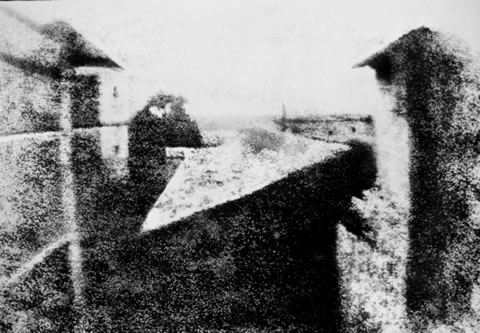
First photographs appear.

"At the floral ball"

Compairing form an subject to earlier paintings, this film seems to have borrowed some elements.

High Art:

  • Aimed at wealthy high society
  • Has detail, intricacies
  • Would reflect high society lifestyle
  • Sometimes buyer's would be portrayed in the paintings
  • Mainly involves people
"At the hypnotist"

  • Exactly like a theater production
  • There is no space created


  • First film to create a sense of depth
Modernism tries to point out the unique features of a medium in order to evolve it and separate it from other mediums.

Eg. Modernism points out that paintings are literally paint on canvas, and are not a reproduction of live, separating it from photographs.

"The Endless Column"

"Symphonie Diagonale"
Abstract Cinema

"Ballet Mecanique"


  • Chaotic
  • Variations to keep interest
  • Abstract
  • Around the idea of rhythm
  • Instead of imitating theatre and paintings, it liberates itself by looking at music, another abstract medium
"The Death of Marat"

"Requiem" by Mozart

"The Battleship Potemkin" by Sergei Eisenstein


"man with a movie camera" by Dziga Vertov

Cultures of Convergence: History of Art and Cinema in the 20th and 21st Century - An introduction.

Cultures of Convergence: History of Art and Cinema in the 20th and 21st Century - An introduction.

1. From Pre-Modernism to Modernism


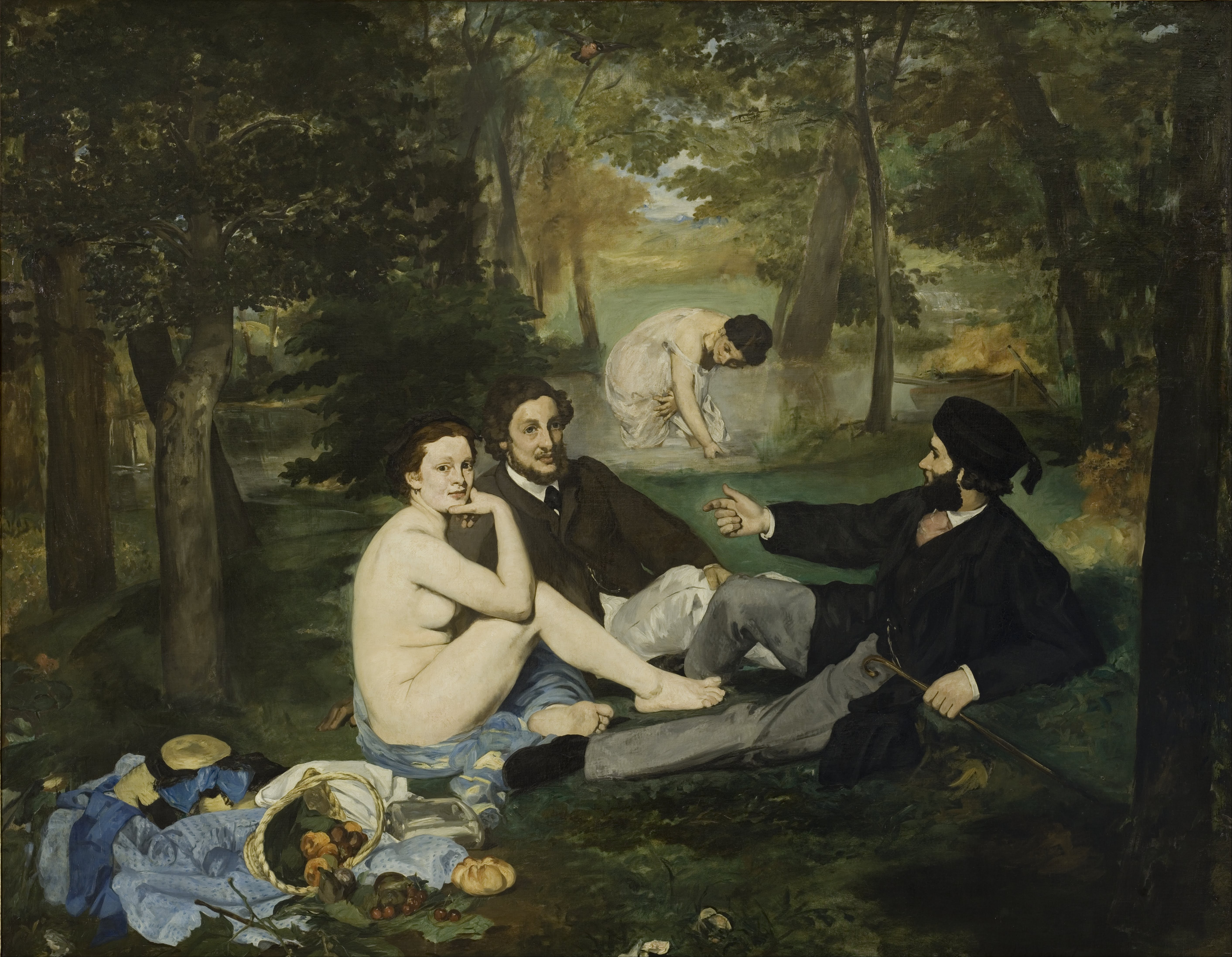
"Picnic on the grass" considered as a foundation of modern art
does not follow rules of perspective
there no longer is a clear subject, the painting itself is questioned.


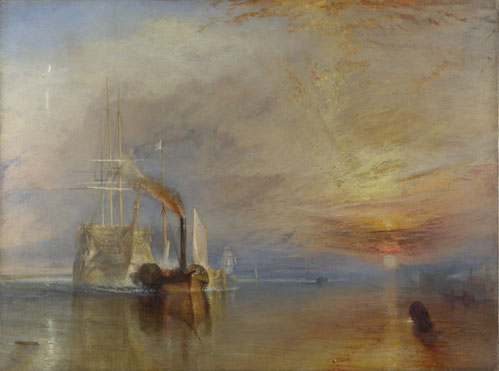
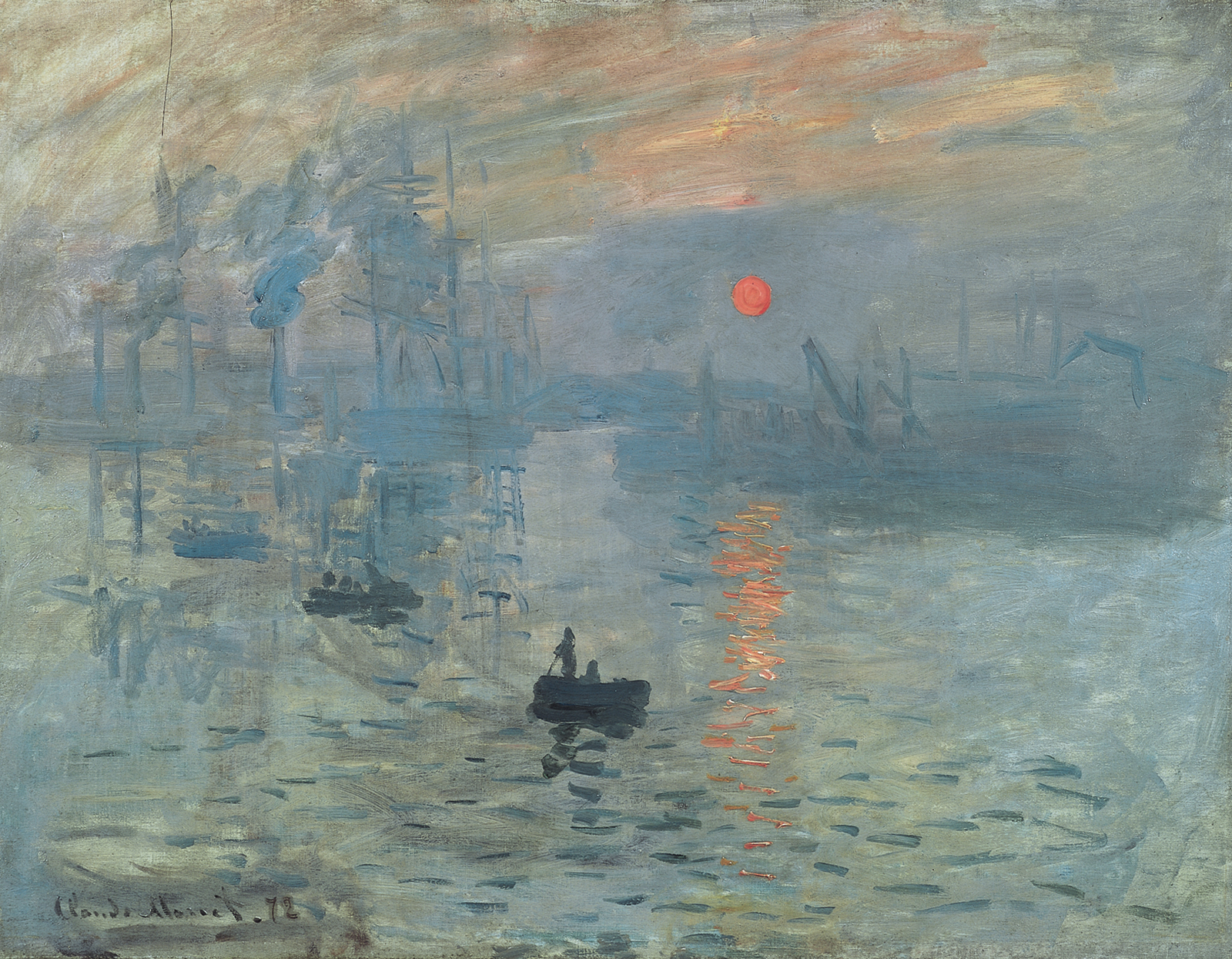
"Sunset Painting" by Turner vs "Impression, Sunrise" by Monet
Turner: subject is the ship
Monet: interest in the colors.

Pre-modernist art is about reproduction,
Modernist art is about presenting the artist's feelings, vision.

"Fountain" by Marcel Duchamp

2. High Modernism


Arists: Jackson Pollock

3. From modernism to post-modernism


Decomposing painting to it's basic elements.

Minimalism: Parodying or going against Modernism, literally interpreting the theory

Conceptual Art

Land Art

Pop Art

4. Contemporary Art


Post Conceptual Art: Immitation of Ads, Text

Relational Aestherics

Contemporary art is a discourse of what art is (?)

MAPS & JOURNEYS: Kathleen's Presentation Notes

MAPS & JOURNEYS: Kathleen's Presentation Notes

Art and mainly our studies involve a series of experiments, mental experiments about meaning and values

Artists to research: Roy Ascott, Viem Flusser

Memories & Air
"We have organs which seem to be made to transform airwaves into signs (to make phonemes out of them) but airwaves are susceptible to noises which destroy the information stored in them and that is why all information stored in the airwaves has to be received and stored in the recipients nervous systems." Viem Flusser, Memories, Arts Electronica 1988

"Psy Art" by Kathleen Rogers
Using thermal imaging in a seance to maybe visualize spirits. However the experiment was unsuccessful... or was it? "If you think it's real, its real"

Also notes on the main project:
-Get a full production pack ready. This is required for the shoot permissions.
-It should be about the metaphorical interpretation of Maps & Journeys

MAPS & JOURNEYS: Geotagging, Open Street Map, GPS, Telepresence and Virtual Space presentation

MAPS & JOURNEYS: Geotagging, Open Street Map, GPS, Telepresence and Virtual Space presentation

NOTES:

Maps are technical instruments that are used for navigational purposes, to show georgaphical data, such as boundaries, to show political status etc...

Maps are used also as political statements.

Maps can be used to tell stories...
  • www.geograph.org.uk
    Open source concept trying to photograph and map the UK.
  • www.geocaching.com
    "a high tech treasure hunt"
    a cache is a small waterproof treasure box, people use GPS to find these boxes
    Once the box is found, you can leave a message in the box, and swap items left in the box.
  • www.openstreetmap.org
    Free open source maps, anyone can update it
    Wikification of Maps
Mapping can be not only about mapping the object, but also mapping the subject and issues behind the object.

The open street map can be used for other purposes, such as humanitarian/crisis mapping, acessibility maps.

Open street map shows that knowlege is power in the hands of the community.


GPS allows individuals to know where they are on the face of the earth to at least one meter precision.

Screenings on telepresence and virtual space:
  • Ian Mott
    "Sound Mapping"
    Uses sensors in suitcases to synthesize dynamic sounds.
  • "Voices of Aliceness"
    Masaki Fujihata
    www.field-works.net
  • "Trace", "Drift" & Grimpant
    Tery Rueb
Paul Sermon:
  • "Telematic Dreaming"
  • "Telematic Vision"
  • "Occupy the Screen"
Eduardo Kac

"Telegarden"
Ken Goldberg

"Ping Body"
stelarc.org

Aram Bartholl (the guy who put government spy code... in a cafe...!)


MAPS & JOURNEYS: Briefing & Screening 1

MAPS & JOURNEYS: Briefing & Screening 1

Briefing Notes:


  • Four weeks to develop/research project.
  • Make sure the learning agreement is done by the presentation
  • Make sure the group production folder is done
  • This year we do bookings ourselves individually
  • After the project presentation, you're on your own and have to work arround the Professional Toolkit studio shoot. (November is going to be hell... erm... busy)
  • The work may be in any shape or form, as long as it's rationalized.

About the unit:

  • Be imaginitive
  • Try and think out of the box
  • Consider alternative form other than cinematic
  • Get the audience to engage with your work
  • You may explore the metaphor of a journey.
  • You can work in groups or solo.

Key Dates:

  • 16th or 17th oct: Possibility of Field Trip
  • 23rd Oct: Project Approval
  • Final Asessment 11th and 12th December
Recommended Reading:
Installation Art: A Critical History
Clair Bishop

The presentation is uploaded to myUCA.


Films Screened:

  • London Orbital (2002)
    Chris Petit & Iain Sinclair

    Notes: Personally it seems like the filmmaker is commenting on the dullness of the M25. He does this by showing footage of the motorway's endlessness, and how this may cause a range of emotions. He is also briefly comments on the criminality and surveillance that occurs on the motorway. It also follows a series of people that investigate the stories behind the M25, figuring out if it's lifeless of not...
    Its also comparing the differences between the walking and driving experience.
  • Measures of Distance (1988)
    Mona Hatoum

    Notes: Its seems like someones journey, portrayed through letters. The letters have been overlaid over the images, therefore it is apparent from the very beginning that this is originating from a letter. It could be interpreted as a way to raise awareness about the war.
  • The Frame (Documentary)
    Chris Welsby

    Notes: The artist uses nature to drive his films. He does not just film nature, but incorporates the forces of nature, such as the wind or the sun, in contraptions used to control the camera.